
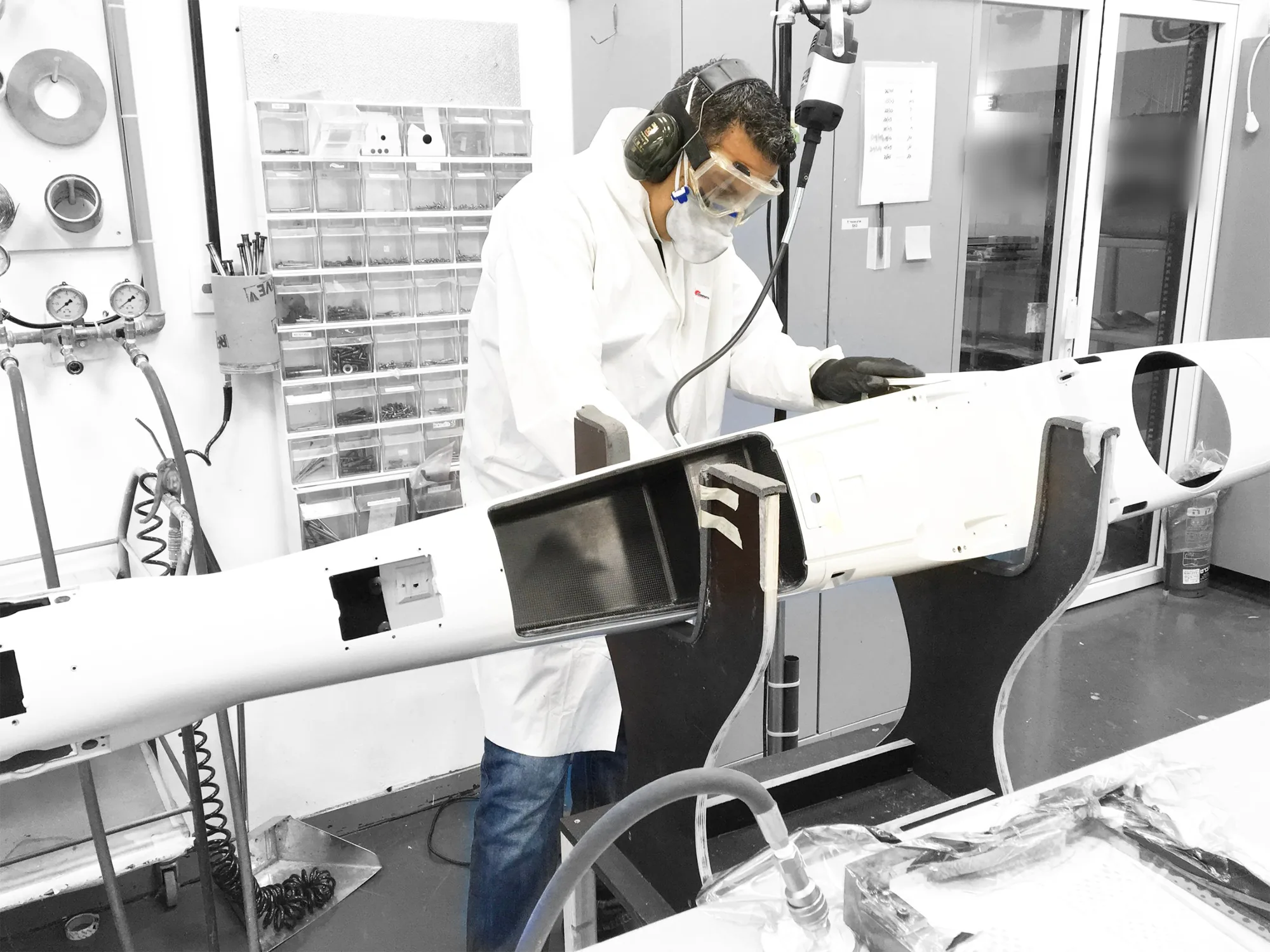
Much of the discussion around SAFE has focused on one number: 35%. But the deeper change in European defence procurement is not simply where components originate. It is who can build, integrate, modify and sustain the capability when it matters.
Europe is investing heavily in defence. The procurement conversation, however, is changing just as significantly as the level of spending.
For decades, a defence competition could largely be framed around familiar questions: Does the system meet the operational requirement? What does it cost? When can it be delivered?
Those questions remain fundamental. But increasingly, there is another set beside them.
Where will the capability be produced? Who controls the technology? Can it be maintained and upgraded locally? What happens if a critical component becomes unavailable? And, five years after delivery, what can the customer do without calling the original supplier?
That is the bigger story behind the EU’s Security Action for Europe instrument, SAFE.
The most important shift is not from foreign production to local production. It is from buying equipment to thinking about where defence capability ultimately lives.
SAFE is an industrial signal, not just a financing instrument
SAFE provides up to €150 billion in long-term loans to EU member states to support defence investment through common procurement. By April 2026, the Council had approved financial assistance for 18 member states (Council of the EU).
The instrument also establishes industrial conditions around procurement. Under SAFE’s baseline rules, the cost of components originating outside the EU, EEA/EFTA states and Ukraine may not exceed 35% of the estimated cost of the end product, subject to applicable arrangements with participating partner countries.
But focusing only on that percentage misses something more consequential.
For the second category of defence products, contractors must be able to decide on the design without restrictions imposed by third countries or third-country entities, including having the legal authority to substitute or remove restricted components (SAFE Regulation, Article 16).
That is not simply a local-content rule. It is a question of control. And it points towards a much broader change in defence procurement.
Every defence programme now has two architectures
When governments procure a defence capability, enormous attention is rightly given to the operational architecture. What must the system detect, protect, intercept, transport or communicate? What range is required? What environment will it operate in? What other systems must it integrate with?
But increasingly, major programmes also need an industrial architecture. That asks a different set of questions:
- Where will integration take place?
- Where will critical structures and components be produced?
- Who has the engineering knowledge?
- Who controls configuration changes?
- Where will maintenance happen?
- Who can qualify replacement components?
- How quickly can production scale?
- How much of that capability will remain accessible to the customer if international supply chains become constrained?
The strongest defence programmes increasingly need both architectures to work together.
The operational architecture determines what the capability must do.
The industrial architecture determines whether the customer can continue to field, sustain and evolve it.
That distinction matters far beyond SAFE.
Local content is not the same as sovereign capability
It is possible to manufacture or assemble a large percentage of a system locally while remaining heavily dependent on the original foreign supplier.
Local assembly may create jobs and economic value. But if the customer cannot modify the system, qualify an alternative component, repair critical structures, access engineering knowledge or maintain production without external approval, then localisation has not necessarily created industrial independence.
That is why procurement teams should look beyond the percentage of domestic content. The more useful question is:
What capability will exist locally after the programme has been delivered?
There is a significant difference between assembling imported kits and possessing qualified manufacturing processes. There is a difference between receiving technical documentation and having engineers who understand how to apply it. There is a difference between maintaining a product and having the ability to modify and evolve it.
And there is a difference between local production during peacetime and an industrial base capable of increasing output when operational demand suddenly changes. Those differences are becoming strategically important.
Technology transfer should be measured by what remains behind
The term technology transfer is widely used in defence procurement, but it can describe very different levels of capability. At its most limited, it can mean documentation, assembly instructions and training. At its most valuable, it creates repeatable industrial capability.
A useful way to think about technology transfer is therefore as a progression.
Level 1 – Assembly
The customer gains the ability to assemble or complete products locally using components and processes largely controlled elsewhere.
Level 2 – Sustainment
Local teams gain the skills, equipment and procedures needed to maintain, repair and support the system.
Level 3 – Production
Manufacturing processes, tooling, quality systems, workforce skills and qualification procedures allow meaningful production activity to take place locally.
Level 4 – Engineering capability
Local industrial teams gain sufficient technical knowledge and authority to adapt processes, integrate changes and support configuration evolution within agreed boundaries.
Level 5 – Industrial resilience
Production, engineering, sustainment and supply-chain capability combine to reduce dependency and allow the customer to maintain or scale critical capability when circumstances change.
Not every programme needs to reach Level 5. Nor should every technology be transferred.
The point is that technology transfer should be defined by the capability the customer wants to possess at the end, not simply by the volume of documentation handed over during delivery. That distinction should be made at the beginning of procurement.
The industrial model should be designed before the supplier model
This may be one of the more important consequences of the changing procurement environment.
Historically, localisation could be addressed after the main technology decision: select the product, choose the supplier, negotiate offsets or local-content obligations. That sequence is becoming less effective.
If industrial resilience matters, the industrial model needs to be considered much earlier. The procurement authority first defines the operational requirement. But it should also define the desired industrial outcome:
- Which capabilities should remain sovereign?
- Which activities should be conducted locally?
- Which technologies require secure access?
- What level of maintenance and repair is required?
- Where is technology transfer strategically valuable?
- Which elements can remain dependent on international partners?
Those decisions then influence the architecture, integration model, supplier structure and technology choices. In other words: localisation should not be added to the programme. It should be designed into it.
The year-five test
There is a simple question procurement teams can use to expose the difference between local content and lasting capability:
What happens in year five?
Suppose the system has been fielded. Operators have been trained. The original programme team has moved on.
Now a sensor needs replacing. A component has become unavailable. The threat has changed. An upgrade is required. Operational demand has doubled.
Can the customer maintain the system? Can local industry produce the necessary structure or component? Can another subsystem be integrated? Does the customer have access to the engineering knowledge required to make the change? Can production increase? Or does every significant modification still depend on the original supplier?
The answers tell a procurement authority far more about industrial resilience than a localisation percentage alone.
Supply-chain resilience is becoming a performance characteristic
Defence procurement has traditionally treated performance as something measured at system level: range, accuracy, endurance, detection distance, payload or protection level.
But the events of recent years have shown that availability itself is a performance characteristic. A highly capable system that cannot be produced, repaired or supplied at the required rate may become operationally inadequate.
The EU’s broader defence-readiness agenda increasingly reflects this emphasis on production capacity and speed. In October 2026, the Council gave final approval to new legislation aimed at simplifying defence procurement, accelerating permitting and making cross-border industrial cooperation easier (Council of the EU, 9 October 2026).
The direction is clear. Europe does not only need to procure more. It needs to be able to produce more, faster, with greater resilience and less exposure to critical dependencies. That changes how suppliers should think about their offers.
What this means for programme partners
A modern defence supplier may therefore need to offer more than a product. Depending on the programme, the customer may need a partner capable of combining technology selection, systems integration, industrial participation, training, sustainment and technology transfer.
This is particularly relevant when multiple technologies must be brought together. An effective programme architecture has to answer two questions simultaneously:
What combination of capabilities delivers the operational effect?
and
What combination of industrial activities delivers the required level of autonomy and resilience?
Those two questions do not always produce the same answer. The cheapest product may not produce the strongest industrial model. The most local product may not provide the best capability. The objective is to find the right balance.
How this thinking connects to Avnon Group
Within Avnon Group, different specialist companies address different parts of this problem.
Mission-led programme delivery
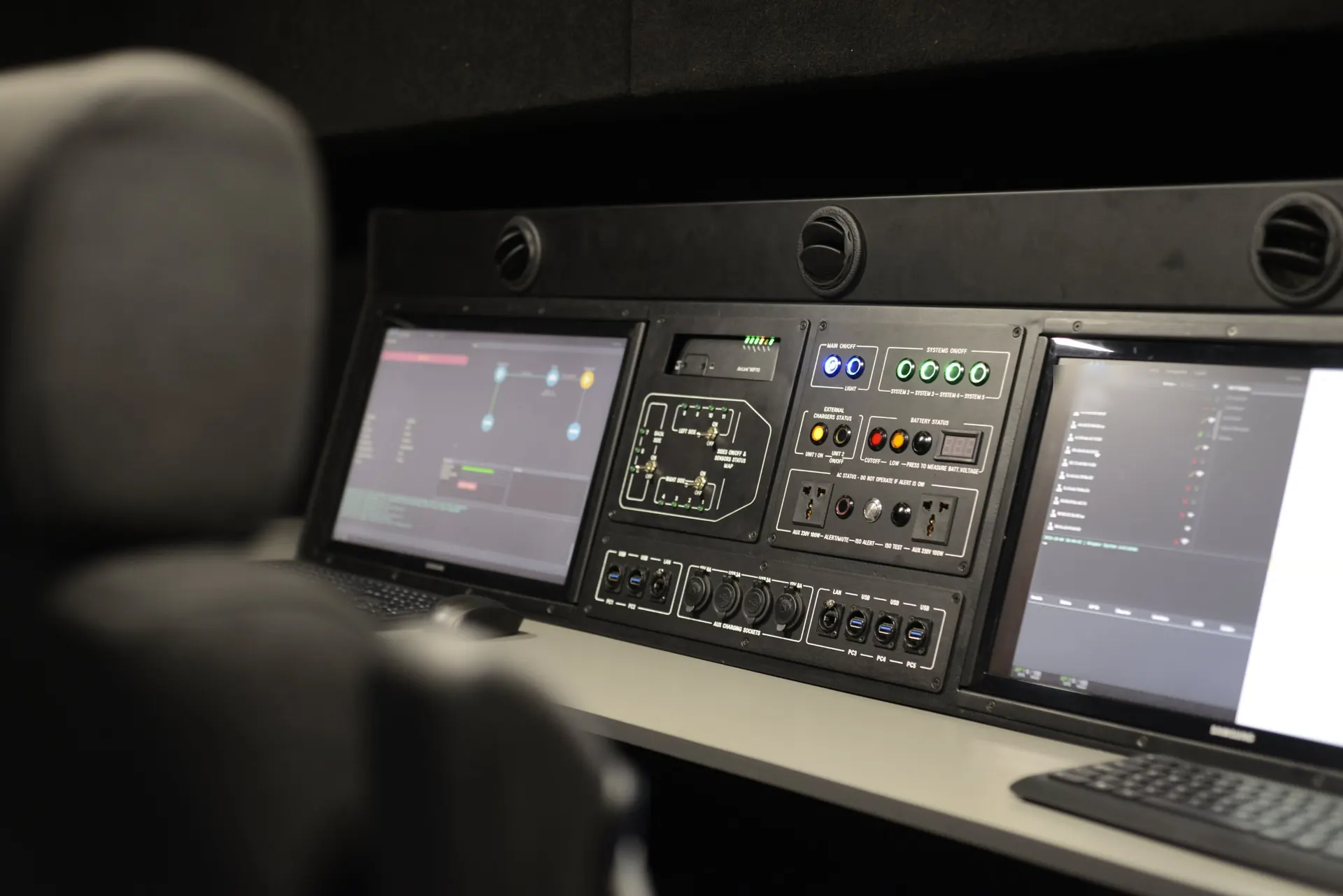
TAR Ideal Concepts begins with the operational requirement rather than a predetermined product catalogue. Its role in mission-led programme delivery is to identify appropriate technologies, configure and integrate systems, manage programme delivery and support training, logistics and lifecycle requirements.
With more than 35 years of experience and a network of more than 520 global partners, TAR can approach the requirement from the mission backwards rather than from a single manufacturer’s product forwards.
In localisation-driven programmes, that matters. Local integration, training, sustainment, partner participation and selected industrial activity can be considered as part of programme architecture rather than treated as an obligation after supplier selection.
Technology transfer and advanced manufacturing
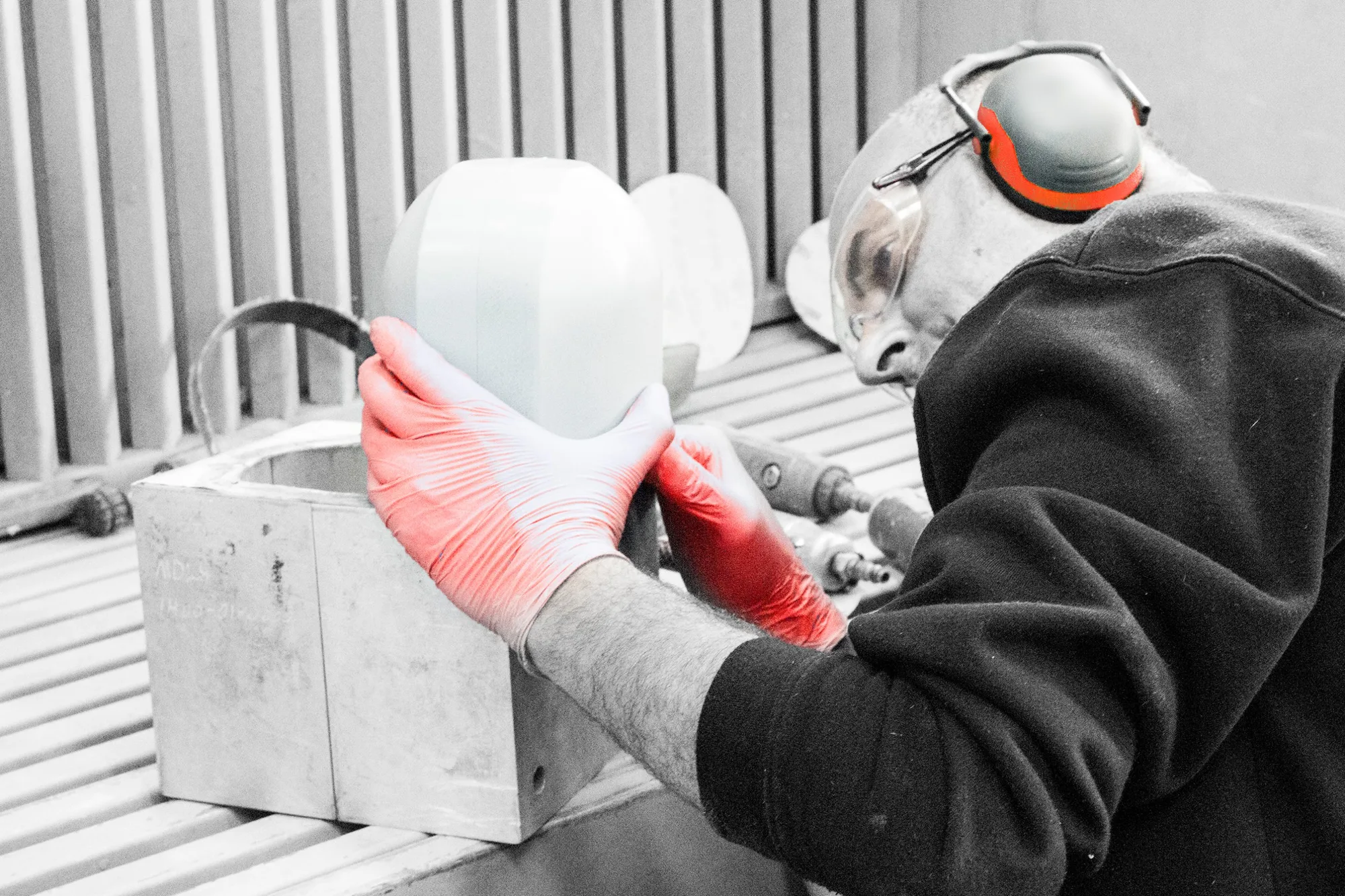
Comparts addresses another layer of the industrial architecture. The company manufactures advanced composite structures for aerospace and defence and supports structured technology-transfer programmes for customers seeking to establish composite manufacturing capability.
That process can encompass facility planning, production processes, tooling, quality systems, workforce training, qualification and continued engineering support.
The objective is not simply to reproduce a component in another location. It is to transfer sufficient process knowledge and production discipline for repeatable qualified manufacturing capability to exist locally. For UAVs, aircraft structures and other lightweight defence applications, that can be a meaningful element of long-term industrial resilience.
Seven questions worth asking before the RFP is finalised
Before a major defence programme reaches final specification, procurement authorities should be able to answer seven questions.
- Origin: Where do critical components and technologies originate?
- Control: Who has the authority and knowledge to modify the system?
- Dependency: Which components, software or processes remain dependent on external suppliers?
- Industrialisation: Which activities could realistically be performed locally?
- Transfer: What knowledge, processes and skills will actually move to the customer or local industry?
- Sustainment: Who will maintain, repair and upgrade the capability throughout its operational life?
- Scale: What happens if production needs to double?
If these questions are addressed only after contract award, the programme architecture may already have limited the available answers.
Beyond the 35% rule
SAFE has brought renewed attention to localisation because its eligibility rules make component origin impossible to ignore. But the more important lesson is bigger than 35%.
The future competitive defence offer will increasingly have to demonstrate not only what the system can do, but also who can produce it, who can sustain it, who can modify it, how quickly it can scale, and how much strategic dependency remains once it is fielded.
That is why localisation, technology transfer and lifecycle support should not sit in separate annexes at the end of a proposal. They increasingly belong in the architecture of the programme itself.
Because ultimately, defence procurement is not only about where equipment is bought.
It is about where capability lives.
Planning a programme involving localisation, technology transfer or industrial participation?